

Moles (nevi) are common skin formations and, in the vast majority of cases, benign.
However, proper monitoring and timely medical evaluation are essential, as certain moles may change over time.
Mole removal is not performed solely for aesthetic reasons. In many cases, it is a preventive medical procedure aimed at safeguarding the patient’s health.
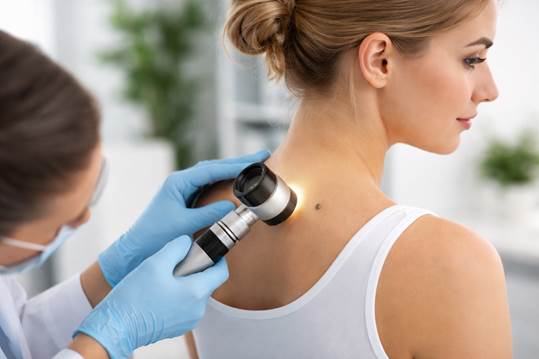
Which Moles Require Monitoring?
Not all moles require removal. What matters most is observing any changes in their characteristics.
Changes in size, shape, or color — as well as symptoms such as pain, itching, or bleeding — require medical evaluation.
The internationally recognized ABCDE rule helps identify suspicious lesions:
- A – Asymmetry: The mole does not have a symmetrical shape.
- B – Border: Irregular, jagged, or poorly defined borders.
- C – Color: Uneven color or multiple shades.
- D – Diameter: Larger than 6 mm (not an absolute criterion).
- E – Evolution: Any change in size, shape, color, or symptoms.
The presence of one or more of these characteristics requires immediate medical assessment.
Systematic monitoring allows for early detection of suspicious changes and appropriate clinical management.
When Is Mole Removal Recommended?
The decision to remove a mole is made following clinical examination by a physician.
Removal is recommended when:
- Changes in the mole’s characteristics are observed
- The mole causes discomfort or is frequently traumatized
- There is medical suspicion requiring further investigation
In certain cases, removal may also be performed for aesthetic reasons — always after proper medical evaluation.
What Is the Best Season for Mole Removal?
Medically, the most appropriate period for mole removal is:
- Autumn
- Winter
- Early Spring
After removal, the skin requires time to heal properly without intense sun exposure.
During the summer months, increased ultraviolet exposure may interfere with healing and increase the risk of irritation or pigmentation changes.
Proper timing contributes significantly to both safe healing and optimal aesthetic outcomes.
How Is Mole Removal Performed?
Mole removal is carried out using safe and medically indicated techniques, depending on the characteristics of each lesion.
The appropriate method is selected only after clinical examination and dermoscopic evaluation.
Mole Removal Techniques
Laser Removal
Laser removal is applied to selected, clinically benign and superficial moles.
- Short procedure
- Usually no sutures required
- Excellent aesthetic outcome
Important:
Laser is not indicated for suspicious moles or cases requiring histological examination.
Shave Excision (Superficial Removal)
Suitable for certain raised, benign lesions.
Performed under local anesthesia with minimal downtime.
Surgical Excision
This is the safest and most indicated method when:
- There is suspicion of dysplasia or malignancy
- Histological examination is required
- The mole is deep
It involves complete removal with sutures and submission for histopathological analysis.
This technique significantly reduces the risk of recurrence.
Healing & Aesthetic Outcome
In most cases, complete removal permanently eliminates the specific mole.
Healing progresses gradually, and when the procedure is properly performed, the resulting scar is typically minimal and improves over time.
Proper aftercare and strict sun protection following removal play a crucial role in achieving the best possible aesthetic result.
Regular preventive mole assessment and timely medical evaluation are essential steps in maintaining skin health.
If you notice changes in a mole or are considering removal before summer, a personalized medical consultation at KM Plastic Surgery Clinic can provide clear guidance and safety.